Short answer
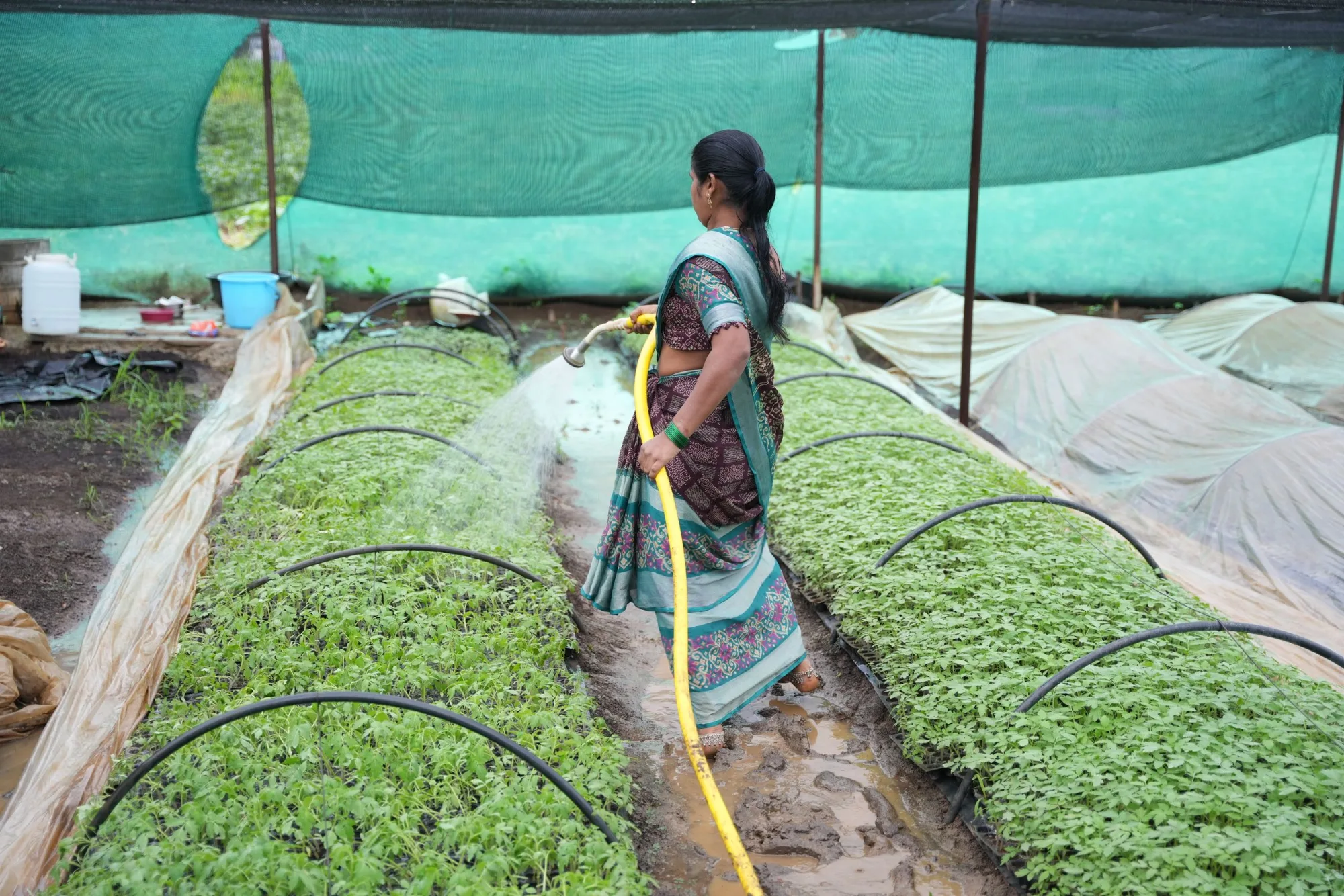
Raise seedlings under a 50% shade net, as TNAU advises, and add a movable extra layer on the hottest middays. Water lightly and often in the morning or evening. Cover fresh nursery beds with straw or mulch. Keep sides open with insect-proof net so air can move. Harden seedlings for 5-7 days before transplanting, and transplant in the cooler afternoon or evening.
Reviewed by the Gopal Agritech team · Updated 2026-10-19
Why do seedlings burn in April and May?
Young seedlings have small roots and soft leaves. They lose water faster than they can take it up. In May, day temperatures reach 40-45°C in many parts of Gujarat and central India, according to an IMD heat wave bulletin from May 2026.
ICAR's arid horticulture institute in Bikaner calls extreme temperature the main problem in raising seedlings on time. It also lists strong sun, low humidity and hot, dry winds. All of these dry out protrays and seed beds within hours.
Step 1: How much shade should I put over the nursery?
Shade is the first line of defence. Set it up before the heat arrives.
- Use a 50% shade net over the nursery. This is TNAU's method for capsicum and brinjal protray nurseries.
- Close the sides with 40 or 50 mesh insect-proof net. ICAR-CIAH notes that leaf curl and other virus diseases are spread by whitefly, aphids and thrips from the seedling stage.
- Add a movable extra layer for the worst days. The Vikaspedia capsicum net house uses a second, movable 35% net on summer middays, mainly from February to June.
- Low-cost options also work. TNAU's forest nursery guide says polythene sheets, shade nets or bamboo mats can shade beds in summer.
- If you raise seedlings in a polyhouse, cover the roof with shade net in May to July. An ICAR article from BUAT Banda advises leaving a gap between net and roof so air can move.
Step 2: When and how should I water?
Heat-stressed seedlings need water often, but in small amounts. The timing matters as much as the quantity.
- Give light, frequent irrigation in the morning or evening hours. IMD's heat wave advisory for Maharashtra gives this advice for vegetables.
- In protrays, TNAU waters daily with a rose can, so the stream does not wash out the cocopeat.
- On larger beds, drip lines save water and labour. ICAR-CIAH runs drip lines in its arid-zone nursery on alternate days, adjusting for seedling age and weather.
- Where water is short, an Odisha (OUAT) agromet advisory notes that sprinkler irrigation brings down the heat effect.
Step 3: Should I mulch nursery beds?
Yes. Mulch keeps the soil cooler and slows drying. An OUAT heat wave advisory says to cover a freshly prepared vegetable nursery with polythene or straw to avoid high temperature. It suggests straw, dry leaves or sawdust as mulch. IMD's May 2026 bulletin also advises straw or organic mulch for vegetables in Maharashtra.
Before sowing, ICAR-CIAH solarises nursery soil in May. The soil is wetted and covered with clear polythene for a week. This uses the summer heat to reduce soil-borne disease.
Step 4: How do I keep air moving?
Shade traps less heat than a closed roof, but still air under any cover gets hot.
- Vikaspedia describes a shade house as a structure that lets light, moisture and air pass through the gaps in the net.
- In peak summer, open a polyhouse's vents fully. The BUAT Banda article says naturally ventilated polyhouses carry crops for about 8-9 months, and advises shading their roofs in the extreme heat of May to July.
- Use insect net, not plastic, on the sides in summer. ICAR-CIAH covers its nursery frames with insect-proof net in the summer-rainy season and with clear polythene in winter.
- Choose an open site. Vikaspedia's shade house guide advises building away from buildings and trees.
Step 5: How do I harden seedlings before transplanting?
Seedlings raised under shade must get used to full sun before they go to the field. If you skip this step, they often wilt and die after transplanting.
- 1Start hardening 5-7 days before transplanting, as ICAR-CIAH advises. A University of Maryland extension guide gives 1-2 weeks.
- 2Remove the cover in stages, so seedlings get a little more sun each day.
- 3Reduce watering slightly to toughen the plants. Do not let them wilt badly. Over-hardening can stunt crops such as cucumber and melon.
- 4Water the beds heavily just before you lift the seedlings.
- 5Transplant in the afternoon or evening, when the sun is weaker. ICAR-CIAH advises afternoon transplanting in hot arid conditions.
Quick heat checklist for nursery owners
| Problem | What to do | Source |
|---|---|---|
| Leaf scorch at midday | 50% shade net; add a movable 35% layer from February to June | TNAU; Vikaspedia |
| Protrays drying out | Light, frequent watering in the morning or evening; rose can for trays | IMD; TNAU |
| Hot, dry seed beds | Cover new beds with straw or polythene; mulch with straw or dry leaves | OUAT advisory |
| Insects and viruses | 40/50 mesh insect-proof net on the sides | TNAU; ICAR-CIAH |
| Overheated polyhouse | Shade net on the roof in May-July with an air gap | ICAR Indian Horticulture (BUAT) |
| Transplant shock | Harden 5-7 days; transplant in the afternoon or evening | ICAR-CIAH |
Where we can help
How Gopal Agritech can help
Gopal Agritech makes UV-stabilised green shade net in 50%, 75% and 90% shade, with 35% on request. That lets you use a 50% base net and add a lighter or darker movable layer for peak summer. We also supply silver and black mulch film, and our quantity calculator helps you size the net for your nursery.