Guides
Straight answersfor farm and site.
Researched answers to the questions our customers ask most, with sources. Updated 2026-10-19.
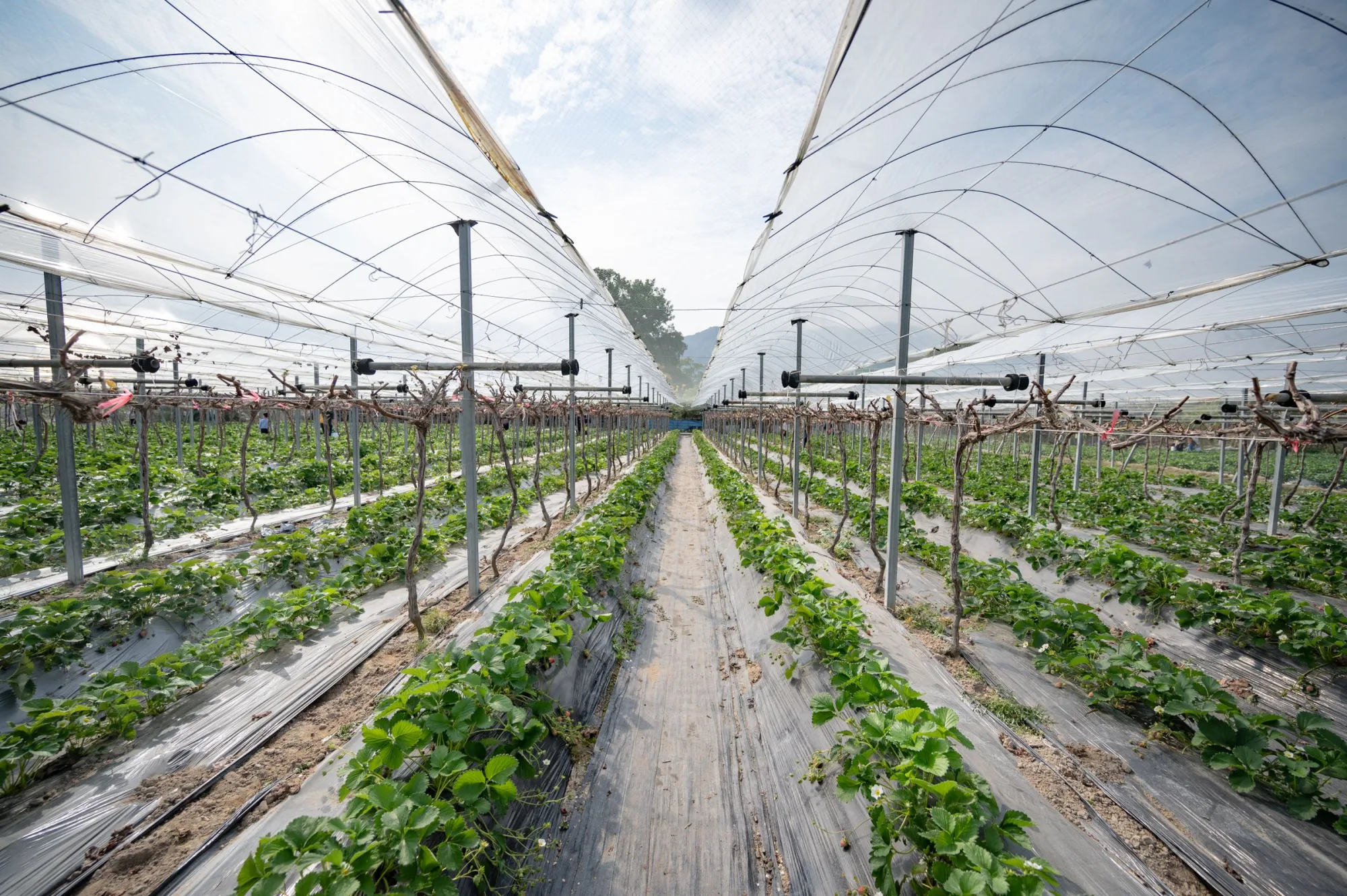
Photo: Simon Kan, Pexels
Farms and nurseries
Shade, heat, subsidies and how much net to buy.
- Which shade net percentage is right for my crop?Most vegetables and nursery seedlings in India do best under 35-50% shade. TNAU uses 50% for protray nurseries and found 35% best for capsicum. ICAR trials found 50% best for tomato and leafy coriander. Shade-loving ornamentals need much more: TNAU recommends about 75% for anthurium and Dendrobium orchids. Gerbera and cut foliage do well at about 50%.Read the answer
- How do I protect nursery seedlings from summer heat?Raise seedlings under a 50% shade net, as TNAU advises, and add a movable extra layer on the hottest middays. Water lightly and often in the morning or evening. Cover fresh nursery beds with straw or mulch. Keep sides open with insect-proof net so air can move. Harden seedlings for 5-7 days before transplanting, and transplant in the cooler afternoon or evening.Read the answer
- Is there a subsidy for a shade net house in Gujarat?Yes. Gujarat's Directorate of Horticulture lists shade net house assistance under MIDH and the state's Integrated Horticulture Development Programmes for general, SC and ST farmers. The published pattern is 50% of the cost, on a unit cost of ₹710 per sq m for tubular structures. Some state schemes add extra assistance. You apply online on the i-Khedut portal. Check the current portal, because rates change.Read the answer
- How much shade net do I need for one acre?One acre is 4,046.86 sq m (43,560 sq ft, or 40 guntha). A 6 m x 50 m roll covers 300 sq m, so a flat roof over one acre needs at least 14 rolls. Side curtains add more. For a 100 m x 40.5 m house with 3 m high sides, add about 6 rolls of 3 m width. Always allow extra for overlaps and fixing.Read the answer
- Shade net house or polyhouse: which should I build?Build a shade net house if you need low-cost protection from strong sun and heat, for nurseries, leafy greens or shade-loving flowers. Build a polyhouse if you grow high-value crops like cucumber or coloured capsicum through the monsoon and winter. It keeps rain out and gives higher yields. But it costs more, and it needs shading and good ventilation in summer.Read the answer
Building sites
Shuttering that survives the monsoon, and how many sheets a slab needs.
- Plywood shuttering swells in the monsoon. What should I use instead?Plywood is wood, so it takes up water through cut edges, nail holes and worn film. Wet sheets get heavier, swell and can start to peel. You can protect plywood better (cover it, seal edges, use a proper release agent) or switch to a face that does not absorb water: steel plates, aluminium formwork or plastic shuttering sheets. Steel and aluminium pay off mainly on large, repetitive jobs.Read the answer
- How many shuttering sheets do I need for a slab?Take the underside area of the slab in sq ft and divide by 32, because one 8 x 4 ft sheet covers 32 sq ft. Round up. A 1,000 sq ft slab needs about 32 sheets, 1,500 sq ft about 47, and 2,000 sq ft about 63. Then add sheets for beam sides and slab edges, plus a small cutting margin.Read the answer
Homes and interiors
Kitchens and furniture that don't swell or get termites.
Enquiry
Tell us what you need to protect or build.
Share your crop, site or quantity and we will come back with the right product, size and a quotation.